Stack / C1000
Anker SOLIX C1000
Updated · 13 Oct 2026 · Sheet checked · 13 Oct 2026
Buy — 1,800 W continuous / 1,056 Wh LFP expandable to 2,112 Wh (BP1000 only); 2,400 W SurgePad ≠ continuous; not Gen 2
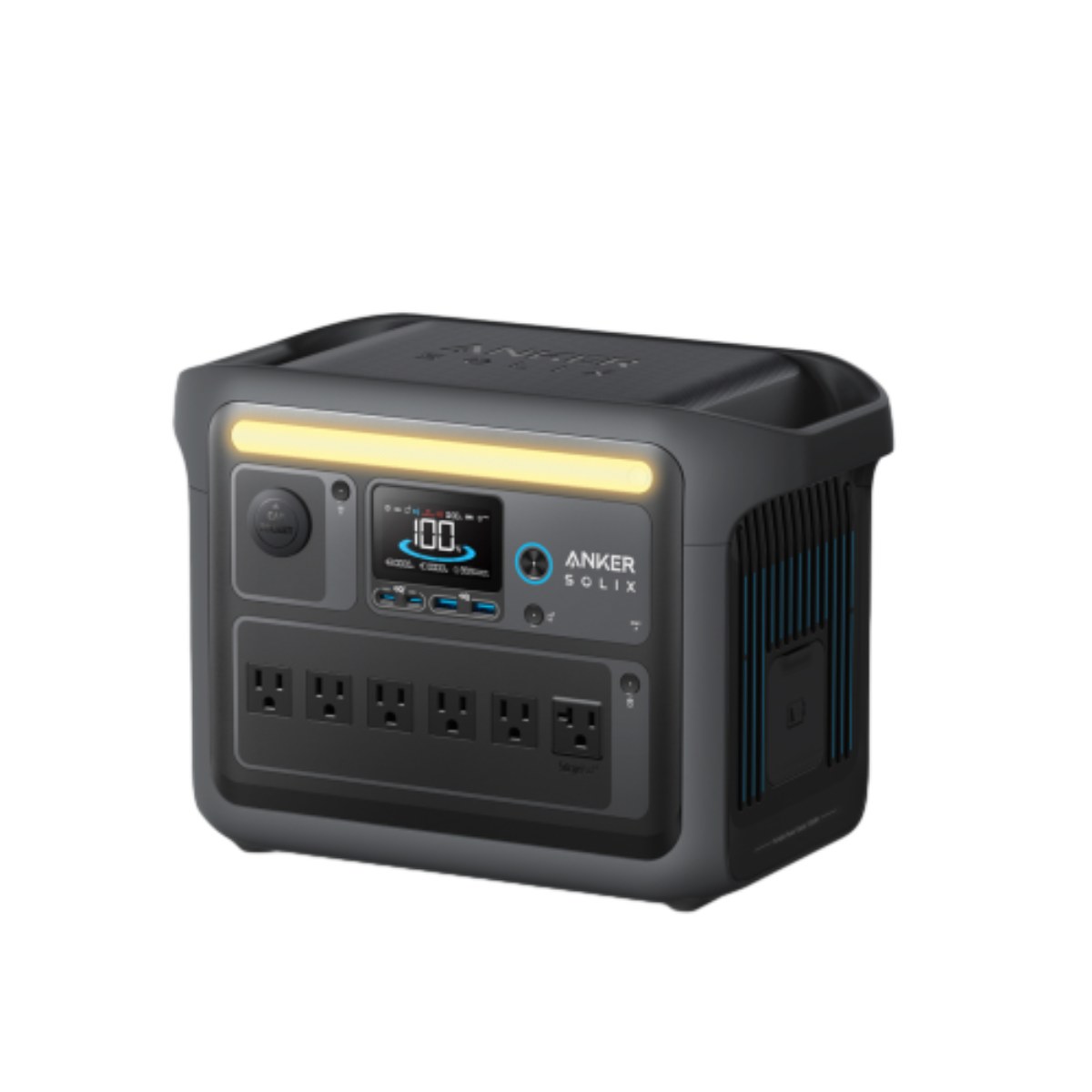
For a ~1 kWh LiFePO₄ station that covers fridge, modem, lights, and a CPAP through a normal outage, and can be doubled later with one add-on battery: 1,800 W continuous and 1,056 Wh. Not the 2,400 W SurgePad number, and not the C1000 Gen 2.
Exact model A1761 (Anker SOLIX C1000; the user guide also covers C1000X under the same number). Not the C1000 Gen 2. Closest live peers: BLUETTI AC180 (fixed pack) and EcoFlow DELTA 2 (expandable).
What it is
Portable power station: LiFePO₄ pack 1,056 Wh, pure-sine inverter 1,800 W continuous at 120 V, six AC outlets, USB-C 100 W + 30 W, two 12 W USB-A, and a 12 V/10 A car port. 28.44 lb, 14.8 × 8.07 × 10.5 in. Cycle claim 3,000 to 80%. Five-year warranty.
Recharge: AC 1,000 W by default; 1,300 W with HyperFlash, switched on in the app (58 min full, 43 min to 80% per Anker). The manual says normal speed is easier on the battery. Solar 600 W max on XT-60: 11–32 V at 10 A, 32–60 V at 12.5 A. Below 32 V the 10 A cap holds you near 300 W. AC and solar do not add; AC wins. UPS switchover <20 ms, bypass capped at 1,440 W.
Expansion: one BP1000 (1,056 Wh, 19.97 lb) takes it to 2,112 Wh. Anker says the BP1000 works only with C1000/C1000X, and the C1000 takes no other pack.
The 2,400 W SurgePad figure works by lowering voltage; Anker's FAQ says it suits heating loads and is not for motors. It is not motor-start headroom.
Price: Anker US page showed US$469.99, in stock, on 13 Oct 2026. Links: no affiliate.
What it will actually run
Running watts first: 1,800 W continuous. Surge second: 2,400 W SurgePad, heating loads only. In UPS/bypass mode: 1,440 W, and no SurgePad.
Planning assumption (not manufacturer): usable Wh ≈ rated Wh × 0.85. 1,056 × 0.85 ≈ 898 Wh. At 500 W: 898 ÷ 500 ≈ 1.8 h. With a BP1000: 2,112 × 0.85 ≈ 1,795 Wh, about 3.6 h at 500 W. Trusted Reviews metered 0.89 kWh at 200 W and 0.95 kWh at 750 W, so ×0.85 holds at moderate loads. Very light AC loads do worse; inverter overhead eats the pack.
Will run
- Fridge or chest freezer for part of a day
- Modem/router/ONT for well over a day
- LED lights
- Laptops
- CPAP
- A furnace blower if its running and start draw fit
- Microwave or coffee maker in short bursts
Skip, or measure first
- 240 V well pumps or anything dual-leg
- Motor starts near 1,800 W
- A desktop or NAS on the AC side during a 20 ms switchover
- Anything over 1,440 W while plugged in as a UPS
- Multi-day ice storms on the base pack alone
- Charging below 32 °F
Specs that matter
- Continuous: 1,800 W @ 120 V; SurgePad 2,400 W resistive only
- Capacity: 1,056 Wh LFP
- Expansion: BP1000 only, to 2,112 Wh
- AC in 1,000 W default / 1,300 W HyperFlash; solar 600 W, 11–60 V
- UPS <20 ms, 1,440 W bypass cap
- No TT-30R; 120 V only
Who should skip it
- You read “2,400 W” as what it runs all night.
- You need 240 V, a TT-30R, or a transfer-switch feed.
- You need more than ~2 kWh: start at F2000 class instead of stacking.
- You need a true online UPS for a NAS or desktop.
Verdict
Buy. For a fridge, network, lights, and CPAP overnight, this is honest kit: 1,800 W continuous, LFP, a sub-hour wall refill when you turn HyperFlash on, and one path to 2,112 Wh that the AC180 does not have. Size with usable Wh (×0.85). Treat SurgePad as heater-only. Do not count on it as a zero-gap UPS. If the label is not A1761, this page does not apply.